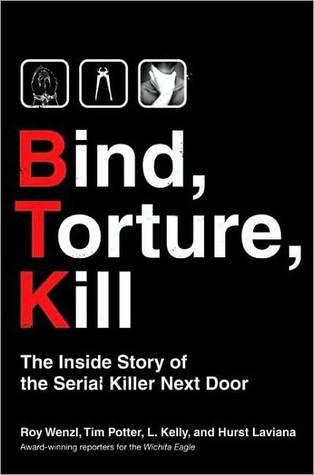
SHIRLEY LOCKS! SHIRLEY LOCKS WILT THOU BE MINE? THOU SHALT NOT SCREEM NOR YET FEE THE LINE BUT LAY ON CUSHION AND THINK OF ME AND DEATH AND HOW ITS GOING TO BE. B.T.K. (Dennis Rader) “Shirley Locks” 1978
Neal Smither and his business, Crime Scene Cleaners, are great material for a book, but are they enough material? The answer is yes and no. Author Alan Emmins had enough material for a great book, but that book would have been only 60% as long as this one. Instead, he turns backflips padding his way to a bloated word count, and you can actually pinpoint the moments where he first becomes desperate and then gives up. Desperate: Beginning on page 181, he drops in a chapter on cryonics--material that he had lying around from a planned magazine article that he never wrote. Giving up: Beginning on page 242, he drops in 19 tedious pages, verbatim, from a court transcript. If you are interested in this book, proceed as follows: Read all scenes where Neal Smither is on stage. Read all scenes that involve actual cleaning. Skip everything else.
There are no stand-out essays in this year's collection, but there are a few tidbits that noirboiled fans might enjoy: L. Jon Wertheim's "Breaking the Bank" (a British MMA fighter becomes involved in a bank heist); David Grann's "True Crime" (a cold case turns hot when a Polish police detective becomes convinced that a murder suspect has published a veiled confession in a postmodern novel); and Stephen Rodrick's "Dead Man's Float" (things go spectacularly wrong in the marriage of a millionaire hedge-fund manager and his trophy wife).
Informative and entertaining but ultimately a bit disappointing, Minds on Trail: Great Cases in Law and Psychology is true crime in Cliffs Notes form with an emphasis on court cases that hinged on expert psychological testimony. Authors Charles Patrick Ewing and Joseph T. McCann, both psychologists, run through a greatest hits collection that includes Lee Harvey Oswald, Patty Hearst, Dan White, John Hinckley, John Demjanjuk, Jeffrey Dahmer, and Andrea Yates among their twenty cases. If true crime fans have a complaint, it will likely be that in some instances Ewing and McCann may not tell them much that they don't already know. My only complaint is that I expected a bit more substance from two experts writing for Oxford University Press. In their epilogue, Ewing and McCann ask what we can learn from the twenty cases they have discussed, and their answer is . . . not much.
I don't often read true-crime books, but after seeing a TV documentary about Colleen Stan's seven-year ordeal (sample: Stan, kidnapped by a man who wanted a sex slave, spent years living under his bed in a coffin-like box), I felt compelled to learn more, if only because her story was so incredible that it was difficult to believe. If you like true crime, and if you are fascinated by the darkness of the sociopathic soul, this one is for you.
The guest editor changes from year to year, but the book stays pretty much the same: Consistently entertaining nonfiction crime essays from The New Yorker (always), plus nods to the likes of The Atlantic Monthly and Esquire, but also to more obscure publications--this time, The Cleveland Free Times and OC Weekly make the cut--just to keep things a little bit honest. Most years, I find that once particular essay makes the book worth its price of admission. This time, it's Malcolm Gladwell's "Dangerous Minds" (fromThe New Yorker, natch), which argues that John Douglas and other FBI criminal profilers are charlatans who operate like cold-reading psychics. For anyone who has ever enjoyed Red Dragon or The Silence of the Lambs or true crime in a similar vein, it should be required reading.
A note to noir enthusiasts: Fans of Horace McCoy's They Shoot Horses, Don't They? should not miss Pamela Colloff's essay "A Kiss Before Dying," which has everything to do with McCoy's novel even though it has nothing to do with a marathon dance contest.
A: Excellent. I intend to read it again. B: Good. I might read it again. C: So-so. I didn't mind reading it. D: Bad. I resented reading it. F: Atrocious. I finished it only because I'm compulsive that way.